Students explore and compare the immense depths of water bodies, from oceans to the Marianas Trench, using an engaging 3D animation. Great for oceanography or plate tectonics.
Engage students in a digital exploration of diverse landforms. Students research, document examples, origins, and images of plains, mountains, and plateaus, then share their unique findings.
Engage students with a video exploring why the moon appears larger near the horizon. They will learn about the fascinating optical illusion altering our perception of lunar size.
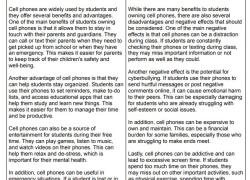
Engage students with two texts on cell phone pros and cons. They will develop critical thinking and articulate their opinions in a clear, persuasive writing response.
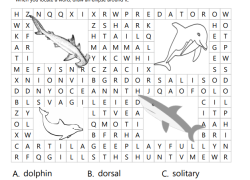
Engage students with a word search exploring sharks and dolphins. They will discover new vocabulary and reinforce fascinating facts about these incredible ocean animals.
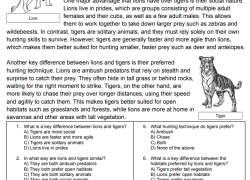
Your students will compare lions and tigers, exploring their unique habitats, hunting methods, and social structures. Engaging questions deepen their understanding of these big cats.
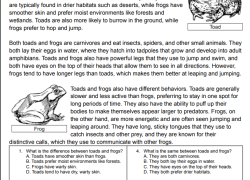
Students explore similarities and differences between toads and frogs. They will read about their unique appearances, habitats, and behaviors, then answer comprehension questions to demonstrate understanding.
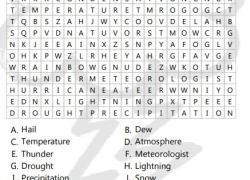
Engage students with a fun word search exploring essential weather vocabulary. They will locate terms like lightning, tornado, and hurricane, reinforcing knowledge of storm power.
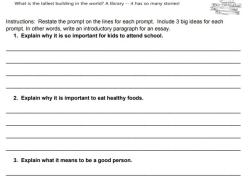
Students will skillfully rephrase writing prompts and brainstorm three main ideas. They will learn to construct effective introduction paragraphs for opinion essays.
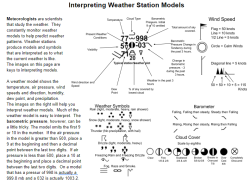
Help students master interpreting weather station models. They will analyze real data, create models, and understand key concepts like isotherms, pressure, and fronts.
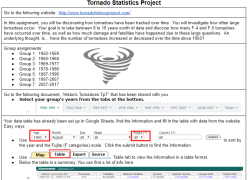
Your students will collect and graph tornado data, investigating historical trends, geographic patterns, and discussing their climate implications. They'll build spreadsheet skills.
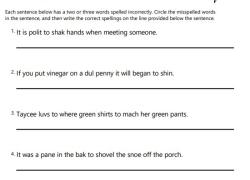
Challenge students to identify and correct spelling errors in ten sentences. They will find and circle misspelled words, then write the correct spellings.