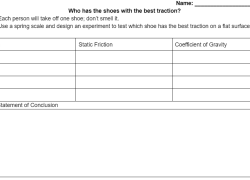
Your students will investigate and compare shoe traction by measuring static friction in this physics experiment. They conduct the lab, analyze data, and draw conclusions on optimal grip.
Students investigate collision and momentum through a digital simulation. They make predictions, analyze results, and deepen understanding of elastic/inelastic collisions, velocities, and data analysis.
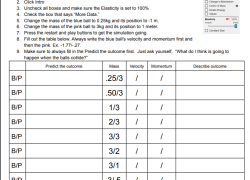
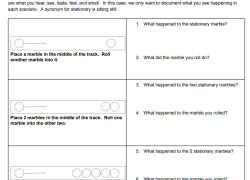
Students will conduct hands-on experiments, exploring motion and collision principles. They'll investigate how size and mass impact interactions, connecting lab discoveries to practical, real-life physics.
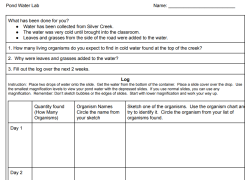
Students observe and document pond water organisms over two weeks. They analyze collected data to calculate population growth rates, create functions, and predict future populations.
Collect essential student details from parents to better meet individual learning needs. Students will receive tailored support and benefit from a more informed classroom approach.
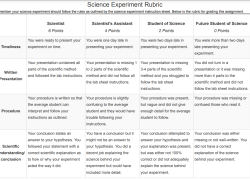
Help students understand expectations for their science experiment presentations. Grade their scientific inquiry, data interpretation, and communication effectively with clear criteria.
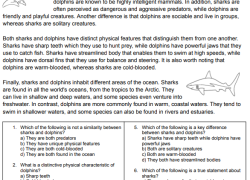
Students will compare and contrast fascinating animals like frogs, sharks, and lions through engaging texts. Boost their reading comprehension and critical thinking with insightful questions.
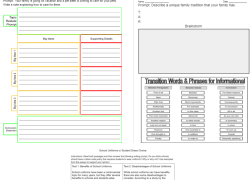
Empower students to comprehend complex texts and craft compelling informational and opinion pieces. They'll utilize guided brainstorming strategies and learn essential transition words.
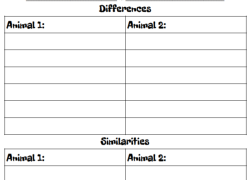
Engage students to explore two animals through articles or videos, then compare and contrast them. They will identify similarities and differences, integrating science concepts with reading comprehension skills.
Students will explore how ocean waves form and sculpt coastal beaches and rock formations. This engaging video visually explains key geological processes shaping our coastlines.
Students will explore how composite and shield volcanoes form and their distinct lava types. The video also covers the Ring of Fire and magma formation.
Engage students with an animated video comparing climate change to Tetris. They will learn about greenhouse gases and their impact, gaining a unique perspective on this critical global issue.