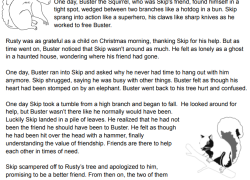
Use Skip's friendship story to teach similes and metaphors. Students will identify figurative language in 10 multiple-choice questions, developing strong language skills and reading comprehension.
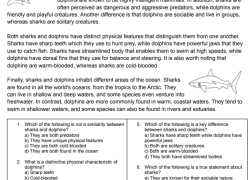
Engage students in comparing sharks and dolphins! They will practice reading comprehension and science skills, then demonstrate understanding with a quiz. Perfect for critical thinking.
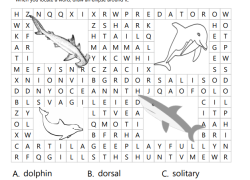
Engage students with a word search exploring sharks and dolphins. They will discover new vocabulary and reinforce fascinating facts about these incredible ocean animals.
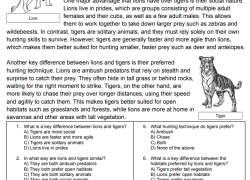
Your students will compare lions and tigers, exploring their unique habitats, hunting methods, and social structures. Engaging questions deepen their understanding of these big cats.
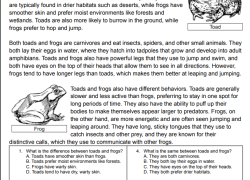
Students explore similarities and differences between toads and frogs. They will read about their unique appearances, habitats, and behaviors, then answer comprehension questions to demonstrate understanding.
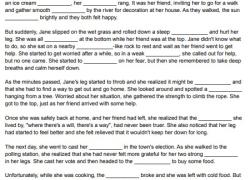
Engage students with a story to practice the 'o'-'e' spelling pattern. Students complete missing words from a bank, developing phonics and early problem-solving skills.
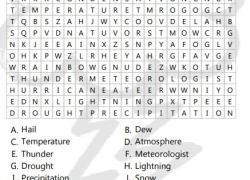
Engage students with a fun word search exploring essential weather vocabulary. They will locate terms like lightning, tornado, and hurricane, reinforcing knowledge of storm power.
Students will decode 'o' consonant 'e' words using context clues. They practice writing each identified word three times to reinforce spelling and phonics skills.
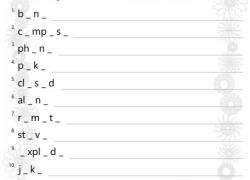
Engage students with Groundhog Day multiplication review. They will master 15 math facts and solve two single-step word problems, strengthening their essential multiplication skills.
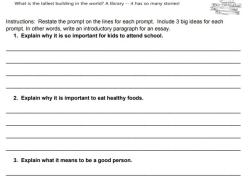
Students will skillfully rephrase writing prompts and brainstorm three main ideas. They will learn to construct effective introduction paragraphs for opinion essays.
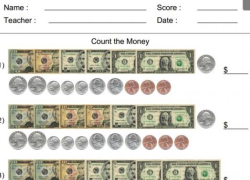
Students will practice counting US bills and coins with randomly generated problems. They will accurately sum various currency amounts, strengthening their K-3 money skills.
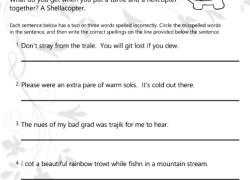
Students will locate and correct misspelled words in ten sentences using a word bank. This activity sharpens spelling skills while emphasizing 'tr' phonics blends.