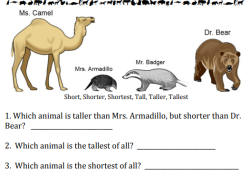
Students will compare four animal heights using comparative and superlative vocabulary: short, taller, tallest. They will read, understand, and apply these specific terms.
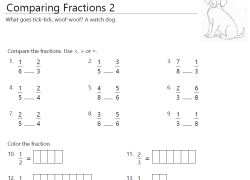
Help 3rd graders compare fractions using , and =. Students will visualize and order fractions using bars and a number line, including those with different denominators.
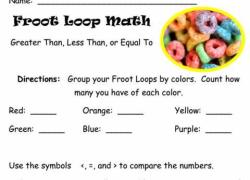
Engage students with a tasty math challenge! They count, sort, and compare quantities of colorful Fruit Loops, developing essential number comparison abilities through playful exploration.
Students practice comparing shapes by size. They will analyze pairs and color them based on relative dimensions, developing visual discrimination skills.
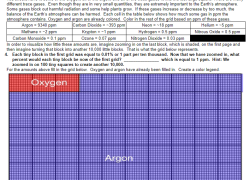
Students explore atmospheric gas composition, calculating parts per million and visualizing proportions. They learn the vital role of greenhouse gases in Earth's temperature balance.
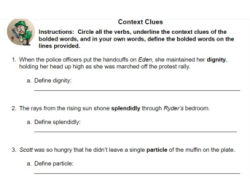
Help students master context clues. They'll define bolded words in sentences, enhancing vocabulary. Teachers can personalize with student names for engaging practice.
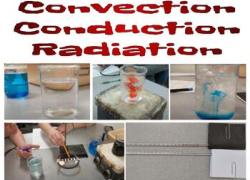
Students actively explore convection, conduction, and radiation through hands-on labs. They'll demonstrate principles using water, melting chocolate, heat lamps, and different colored papers.
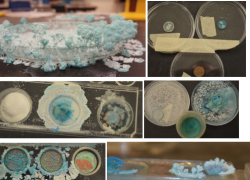
Challenge students to design and conduct their own penny oxidation experiment. They apply the scientific method, observe chemical weathering, and deepen content understanding through daily observations.
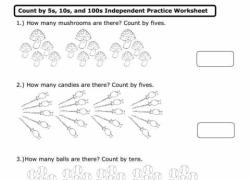
Engage students in skip counting by 5s, 10s, and 100s using pictures. They will build essential number sense and foundational math skills for future learning.
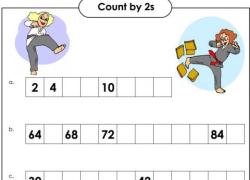
Students practice counting by twos with this engaging worksheet. They will strengthen their number sense and skip-counting skills, building foundational math abilities.
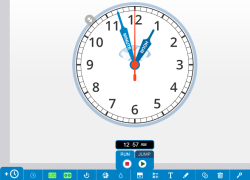
Empower students to master time-telling! Generate custom clock images with various hands, numbers, and features. Perfect for lessons exploring elapsed time, analog clocks, and time concepts.
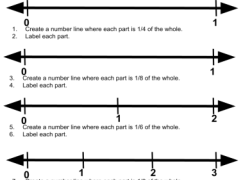
Help 3rd graders visualize and understand fractions. Students will construct and label fractions directly on number lines, enhancing their grasp of fractional parts.