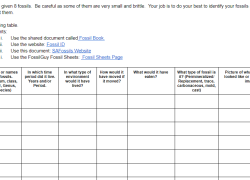
Students will identify various fossil types using provided links, researching their formation, ancient environments, and geologic time. They will also explore the significance of paleontological study.
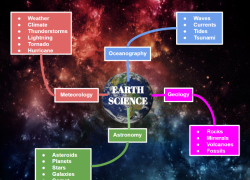
Students develop an Earth Science concept map in Google Drawing, connecting terms from geology, astronomy, and meteorology. They'll organize core concepts and use a collaborative tool. Rubric included.
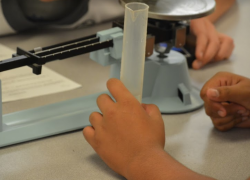
Students design and conduct an experiment to determine the densities of various rocks and minerals. They will apply scientific inquiry to calculate mass, volume, and density.
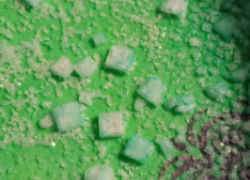
Students observe crystal formation and explore how impurities change mineral color in this Earth Science lab. Perfect for grades 3-10, it includes student work and sample results.
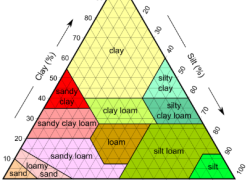
Engage students in hands-on science as they discover soil type and pH levels. They will apply vocabulary and use a soil pyramid to classify textures.
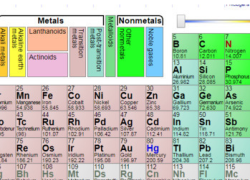
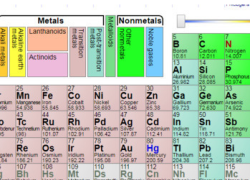
Students will research 12 minerals, identifying their elemental composition using the Periodic Table, and exploring their industrial uses.
Guide students to observe and explain how geysers work. They will understand the roles of heat, pressure, and water in creating an eruption, connecting models to real phenomena.
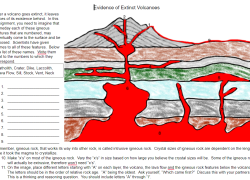
Students label volcanic features, learning igneous rock formation, superposition, and cross-cutting relationships. They will identify evidence of past volcanism and present real-world examples.
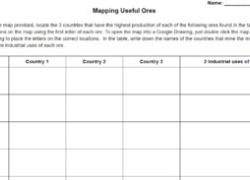
Students research valuable industrial ores, identify top global producers, and map their locations. They will also learn diverse industrial uses, reinforcing geography skills.
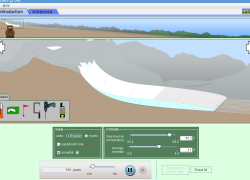
Students explore glacial formation, growth, and shrinkage. They act as scientists in an interactive lab, discovering how glaciers move and impact Earth's landscapes over time.
Students research 12 minerals, identifying their elemental composition using the Periodic Table. They'll classify elements as metals or nonmetals and discover industrial uses.
Students will learn how river deltas form from deposition and why some areas erode. They'll explore how ice ages impacted landscapes and supported early civilizations.