Your students will observe a powerful earthquake and explore liquefaction, learning how ground turns to quicksand. They'll comprehend environmental impacts and structural shifts.
Help students understand how melting glaciers impact ocean levels. This video clarifies the role of thermal expansion in rising waters, connecting it to climate change.
Students will explore an animated comparison illustrating the vast scale differences between cells, bacteria, viruses, and cellular parts. Enhance their understanding of microscopic dimensions.
Students will learn geology, meteorology, and astronomy using engaging graphics, animations, and videos. They will deepen their Earth science understanding with comprehensive labs and assignments.
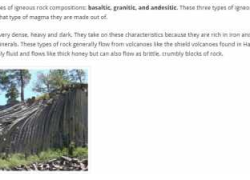
Students explore atmospheric gas composition, calculating parts per million and visualizing proportions. They learn the vital role of greenhouse gases in Earth's temperature balance.
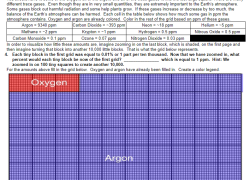
Engage students with a dynamic convection currents model and demonstration. They will visualize air movement, applying understanding to water convection, volcanoes, and Earth's mantle.
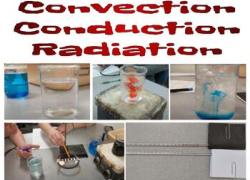
Students actively explore convection, conduction, and radiation through hands-on labs. They'll demonstrate principles using water, melting chocolate, heat lamps, and different colored papers.
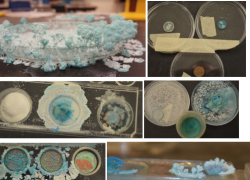
Challenge students to design and conduct their own penny oxidation experiment. They apply the scientific method, observe chemical weathering, and deepen content understanding through daily observations.
Students explore the USGS earthquake website, investigating recent global seismic events. They analyze data on magnitude, intensity, depth, and geographic impact using maps and charts.
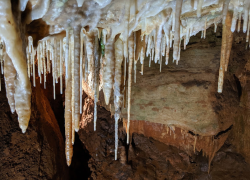
Students learn about common cave formations by identifying images, then research an assigned cave to answer specific questions. This activity builds curiosity for Earth's amazing underground environments.
Students investigate how melting glaciers contribute to rising ocean levels. This video also clearly explains thermal expansion, linking it to the impacts of climate change.
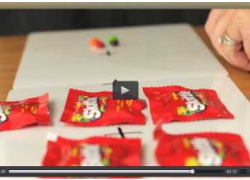
Students discover additive properties, including commutative and associative, by manipulating Skittles. They will master combining like terms, simplifying expressions, and creating equivalent expressions.