Engage students with Bill Nye as they explore the joy of discovery. They will hypothesize, test ideas, and form conclusions, thinking like scientists with captivating visuals.
Spark student interest in math with Studio C's hilarious parody. Students will connect mathematical ideas to a popular TV show, making learning fun and engaging.
Students will explore how Alzheimer's disease affects the brain, understanding its impact and the progressive stages of this complex neurological condition.
Introduce cells with an engaging animation! Students will explore diverse cell types, learn their functions, and discuss trivia questions to spark scientific curiosity.
Students explore and compare the immense depths of water bodies, from oceans to the Marianas Trench, using an engaging 3D animation. Great for oceanography or plate tectonics.
Engage students in a digital exploration of diverse landforms. Students research, document examples, origins, and images of plains, mountains, and plateaus, then share their unique findings.

Engage students with a video exploring why the moon appears larger near the horizon. They will learn about the fascinating optical illusion altering our perception of lunar size.
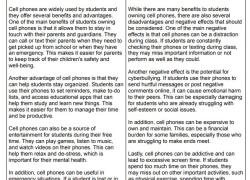
Engage students with two texts on cell phone pros and cons. They will develop critical thinking and articulate their opinions in a clear, persuasive writing response.
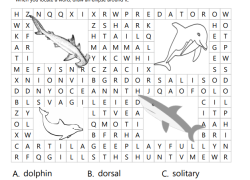
Engage students with a word search exploring sharks and dolphins. They will discover new vocabulary and reinforce fascinating facts about these incredible ocean animals.
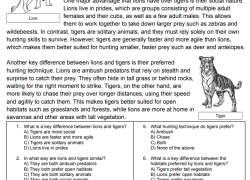
Your students will compare lions and tigers, exploring their unique habitats, hunting methods, and social structures. Engaging questions deepen their understanding of these big cats.
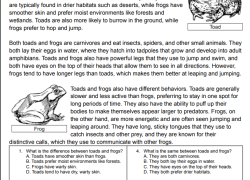
Students explore similarities and differences between toads and frogs. They will read about their unique appearances, habitats, and behaviors, then answer comprehension questions to demonstrate understanding.
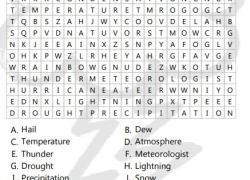
Engage students with a fun word search exploring essential weather vocabulary. They will locate terms like lightning, tornado, and hurricane, reinforcing knowledge of storm power.