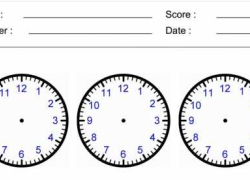
Students draw clock hands on printable worksheets, practicing telling time. Quiz your class with customizable layouts featuring 1, 2, 4, 6, or 9 clocks per sheet.
Engage third graders with a timed game! Students identify author's purpose (PIE) by analyzing passages and reinforce multiplication skills. They will master persuade, inform, and entertain concepts.
Engage students in a digital exploration of diverse landforms. Students research, document examples, origins, and images of plains, mountains, and plateaus, then share their unique findings.

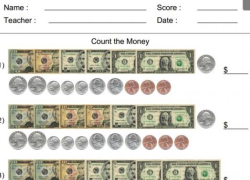
Students will practice counting US bills and coins with randomly generated problems. They will accurately sum various currency amounts, strengthening their K-3 money skills.
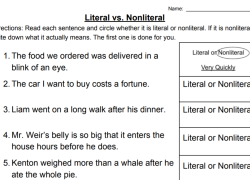
Help 3rd graders practice distinguishing between literal and nonliteral language. Students will interpret figurative sentences, explaining their true meaning and identifying different language uses.
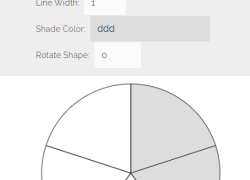
Create custom visuals of fractional parts using circles and polygons. Students will visualize and better understand parts of a whole in your lessons and assignments.
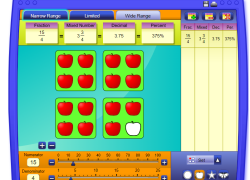
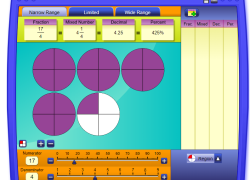
Students visually understand fractions and their equivalence as mixed numbers, decimals, and percents. Interactive tools demonstrate these relationships using various models.
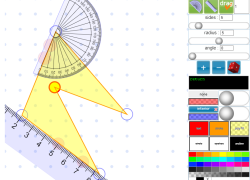
Students actively explore polygons and quadrilaterals, manipulating shape properties and angles. They learn about interior/exterior angles and virtually practice using protractors and rulers.
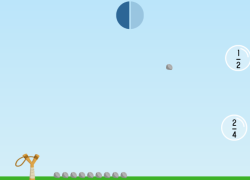
Students will identify fractions and shoot matching bubbles in a dynamic game. Difficulty increases with faster bubbles and more options, fostering fraction recognition skills.
Students explore improper fractions, mixed numbers, decimals, and percentages. They manipulate numerators/denominators to build and understand various length, area, and set models.
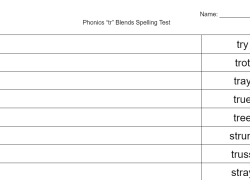
Assess student understanding of 'tr' blend words. Students will spell 20 words, self-correct their work, and practice any missed words three times.
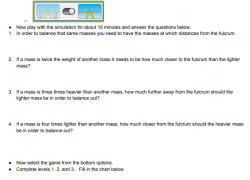
Your students will explore lever balancing in a Phet simulation. They investigate mass and distance relationships from the fulcrum and calculate mechanical advantage.