Engage students to design an experiment investigating how surface area impacts physical weathering. They use Alka-Seltzer to model rocks, developing hypotheses and drawing conclusions on weathering rates.
Students will explore animal adaptations and how they protect species. They will learn about natural selection, inherited behaviors, and fascinating examples like migration and hibernation.
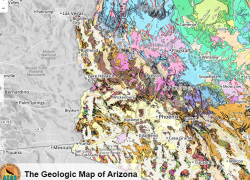
Students will analyze geologic maps to determine rock types, faults, and ages. They learn about Arizona's ancient environments and review essential Earth Science terms.
Help third graders reinforce and reteach prefixes and suffixes in a fun way. Students collect jewels and answer reading questions, building key vocabulary through an engaging game.
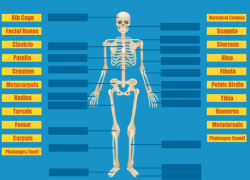
Students learn human anatomy by interactively labeling or assembling a skeleton. Immediate feedback and unlimited practice help them master skeletal structure, improving understanding and scores.
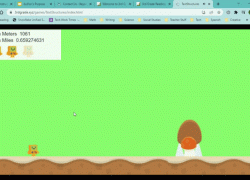
Students navigate an obstacle course, answering text structure questions to continue. They'll practice identifying sequence, cause/effect, problem/solution, and more, aiming for a 10-mile run.
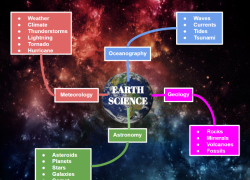
Students develop an Earth Science concept map in Google Drawing, connecting terms from geology, astronomy, and meteorology. They'll organize core concepts and use a collaborative tool. Rubric included.
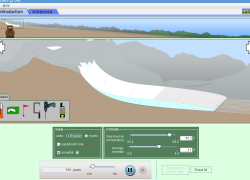
Students explore glacial formation, growth, and shrinkage. They act as scientists in an interactive lab, discovering how glaciers move and impact Earth's landscapes over time.
Students will explore an animated comparison illustrating the vast scale differences between cells, bacteria, viruses, and cellular parts. Enhance their understanding of microscopic dimensions.
Students will learn geology, meteorology, and astronomy using engaging graphics, animations, and videos. They will deepen their Earth science understanding with comprehensive labs and assignments.
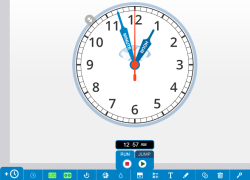
Empower students to master time-telling! Generate custom clock images with various hands, numbers, and features. Perfect for lessons exploring elapsed time, analog clocks, and time concepts.
Students explore the USGS earthquake website, investigating recent global seismic events. They analyze data on magnitude, intensity, depth, and geographic impact using maps and charts.