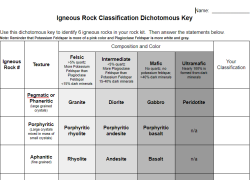
Engage students in identifying igneous rocks with a dichotomous key. They will explore texture, composition, and color, and review crystallization, intrusive, and extrusive rock formation.
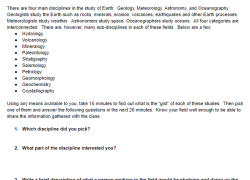
Students explore ten Earth Science disciplines, research career descriptions, salaries, and educational paths. They discover diverse opportunities and financial potential in geology.
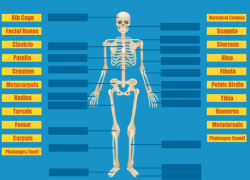
Students learn human anatomy by interactively labeling or assembling a skeleton. Immediate feedback and unlimited practice help them master skeletal structure, improving understanding and scores.
Engage students measuring metric distances by propelling pens across the room. They will discover the Magnus Effect and learn to analyze data using spreadsheets with formulas.
Students explore rock weathering processes by identifying examples and creating a presentation. They analyze mechanisms, agents, and climate connections, then present their findings.
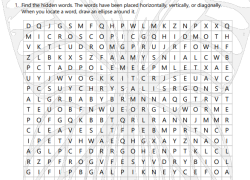
Students will actively search for key vocabulary related to metamorphosis. Reinforce terms describing a caterpillar's transformation into a butterfly, ideal for 3rd graders.
Students practice mineral identification using a dichotomous key. Given characteristics like luster and hardness, they learn to apply the key and master essential vocabulary before their test.
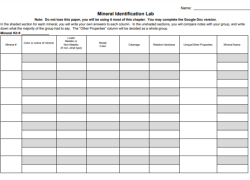
Students will master mineral identification in a 4-day lab. They will test streak, cleavage, luster, hardness, and other properties, then apply a dichotomous key.
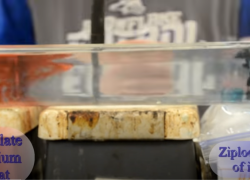
Students model air convection by observing warming and cooling water. They discover how wind forms and explore high and low pressure systems. Connect temperature to atmospheric phenomena.
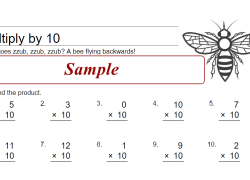
Students will build multiplication fact fluency 2-12 using timed tests, aiming for speed and accuracy. Engaging daily practice includes fun facts, jokes, and pictures to trace or color.
3rd graders identify similes, metaphors, personification, and hyperbole through an engaging, fiery game. Students will categorize sentences to master figurative language skills.

Engage students with a video exploring the incredible scale of Earth's oceans. They will visualize its immense vastness, gaining a powerful new perspective on its true size.