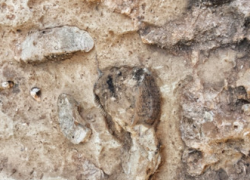
Guide students to create various 2D shapes and original images using a digital geoboard. Students explore properties, area, and perimeter through interactive design.
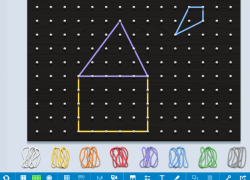
Engage students to locate surface water landforms such as meanders, deltas, and floodplains using Google Earth. They will visualize vocabulary and master geo-coordinates.
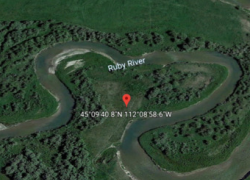
Engage students to design an experiment investigating how surface area impacts physical weathering. They use Alka-Seltzer to model rocks, developing hypotheses and drawing conclusions on weathering rates.
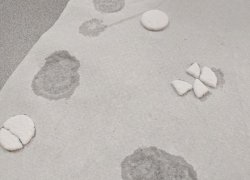
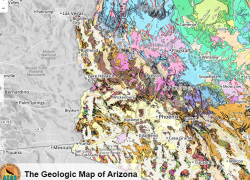
Students will analyze geologic maps to determine rock types, faults, and ages. They learn about Arizona's ancient environments and review essential Earth Science terms.
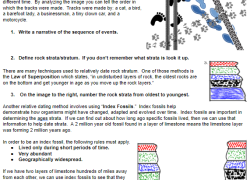
Students will learn relative dating methods by solving puzzles and numbering rock strata. They'll define superposition, index fossils, cross-cutting, and unconformities for geological sequencing practice.
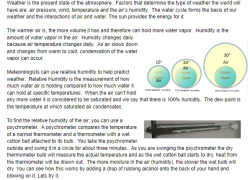
Students explore relative humidity and dew point, using psychrometers and calculators. They conduct experiments, formulate hypotheses, and discuss humidity's impact, comparing different measurement methods.
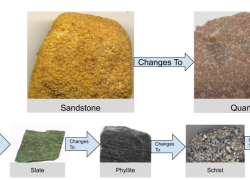
Students research eight metamorphic rocks, understanding foliated vs. non-foliated types, parent rocks, and key minerals. They'll engage in group discussions with higher-order thinking questions.
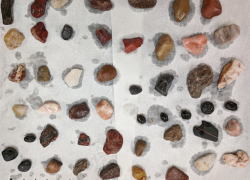
Engage students in a hands-on exploration of rock abrasion. They will classify, measure mass loss in a tumbler, and calculate change rates, revealing weathering's powerful impact.
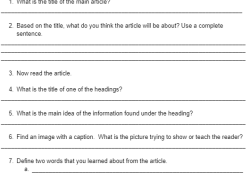
This worksheet reinforces essential reading standards as students engage with Scholastic News articles. They will practice comprehension, critical thinking, and analysis, building stronger literacy skills.
Students explore Earth's age through an engaging animated video. They will learn radioactive dating methods like uranium and zirconium, and understand geologists' techniques for relative age dating.
Help students master identifying main ideas and supporting details. This video is perfect for introducing or reviewing how to find key information in stories and paragraphs.
Challenge students to classify sedimentary rock samples using a dichotomous key. They will hone observation, inference, and conclusion-making skills, discovering how these rocks are grouped.