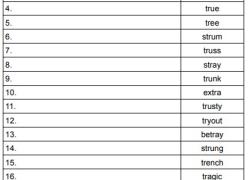
Help students master 'tr' phonics blends with this 20-word spelling assessment. They will study, take the test, self-check, and correct errors. A customizable Google Doc is included.
Boost student recall of the Bill of Rights with an energetic, fun rap. Students will review and reinforce understanding of key amendments through engaging musical learning.
Master creating realistic, customizable Jeopardy-style games with Jeopardylabs.com. Students will actively review and learn new material through exciting, competitive gameplay.
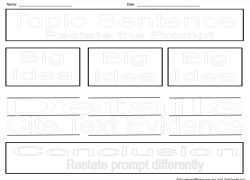
Students organize ideas for five-paragraph expository writing. They'll brainstorm main ideas, add details, cite text evidence, and structure their conclusion paragraphs effectively.
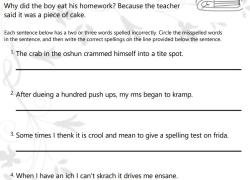
Challenge students to locate 2-3 misspelled words in 10 sentences, emphasizing 'cr' blends. An alphabetical word bank supports correct spelling and reinforces phonics skills.
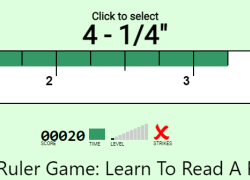
Engage students with an interactive game where they master ruler measurements. Students practice reading inches to sixty-fourths, building accuracy and speed as they progress.
Help your students debunk common myths about evolutionary theory. They will learn to identify key misconceptions, promoting a more accurate and robust scientific understanding.
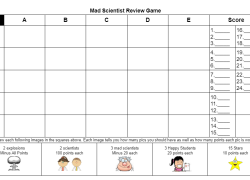
Students enthusiastically review vocabulary and key concepts with an interactive game. They answer questions, earn points, and face thrilling risks, fostering active learning and memorable test prep.
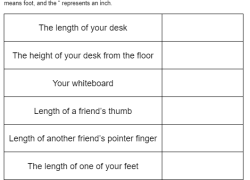
Engage students in hands-on practice measuring to the nearest quarter inch. They use a ruler to measure classroom objects and more, building practical skills in this customizable lab.
Students dive into estimating water volume in diverse containers. They measure with graduated cylinders, then compare their predictions to actual amounts for engaging learning.