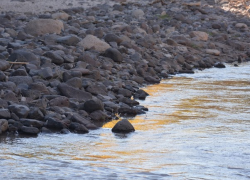
Students explore rock weathering processes by identifying examples and creating a presentation. They analyze mechanisms, agents, and climate connections, then present their findings.
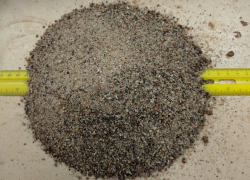
Students determine the angle of repose for sand, observing how slope impacts stability. They will compare trials, apply math skills, and analyze observations about erosion and landslides.
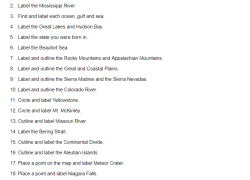
Guide students as they learn to identify, label, and map 25 major landforms spanning North and South America. An optional presentation enhances their geological understanding.
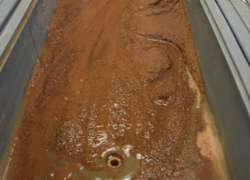
Students use stream tables to observe how rivers develop. They will explore how landslides change river courses, meanders, sediment deposition, river paths, and delta formation.
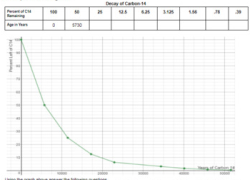
Students model absolute dating and half-life with candy. Graph Carbon-14 decay, solve problems, and apply probability to date rocks and fossils.
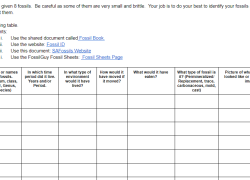
Students will identify various fossil types using provided links, researching their formation, ancient environments, and geologic time. They will also explore the significance of paleontological study.
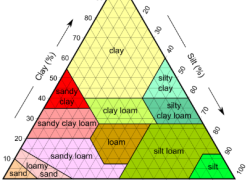
Engage students in hands-on science as they discover soil type and pH levels. They will apply vocabulary and use a soil pyramid to classify textures.
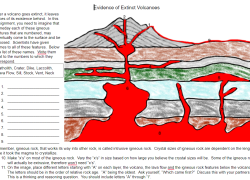
Students label volcanic features, learning igneous rock formation, superposition, and cross-cutting relationships. They will identify evidence of past volcanism and present real-world examples.
Students will learn how river deltas form from deposition and why some areas erode. They'll explore how ice ages impacted landscapes and supported early civilizations.
Your students will observe a powerful earthquake and explore liquefaction, learning how ground turns to quicksand. They'll comprehend environmental impacts and structural shifts.
Students will learn geology, meteorology, and astronomy using engaging graphics, animations, and videos. They will deepen their Earth science understanding with comprehensive labs and assignments.
Students explore the USGS earthquake website, investigating recent global seismic events. They analyze data on magnitude, intensity, depth, and geographic impact using maps and charts.