Students will learn geology, meteorology, and astronomy using engaging graphics, animations, and videos. They will deepen their Earth science understanding with comprehensive labs and assignments.
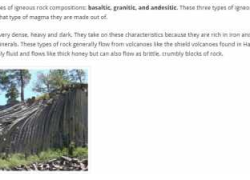
Students explore atmospheric gas composition, calculating parts per million and visualizing proportions. They learn the vital role of greenhouse gases in Earth's temperature balance.
Students explore the USGS earthquake website, investigating recent global seismic events. They analyze data on magnitude, intensity, depth, and geographic impact using maps and charts.
Students investigate how melting glaciers contribute to rising ocean levels. This video also clearly explains thermal expansion, linking it to the impacts of climate change.
Students explore and compare the immense depths of water bodies, from oceans to the Marianas Trench, using an engaging 3D animation. Great for oceanography or plate tectonics.
Engage students with a fun word search exploring essential weather vocabulary. They will locate terms like lightning, tornado, and hurricane, reinforcing knowledge of storm power.
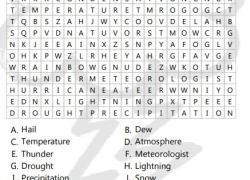
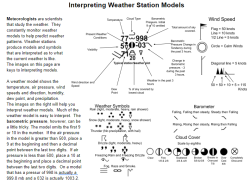
Help students master interpreting weather station models. They will analyze real data, create models, and understand key concepts like isotherms, pressure, and fronts.
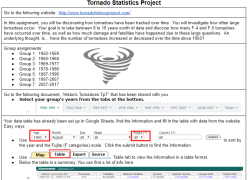
Your students will collect and graph tornado data, investigating historical trends, geographic patterns, and discussing their climate implications. They'll build spreadsheet skills.
Students engage with the scientific method, honing grammar skills. They practice writing complete sentences to document experiment observations and insightful conclusions effectively.

Students will learn Earth's crust, mantle, and core, plus convection and Pangaea. An engaging, animated song and video help them visualize these fascinating concepts.
Students explore Earth's layers, scientific discovery methods, and concepts like convection currents and density. They will understand how layers work together to form our planet.
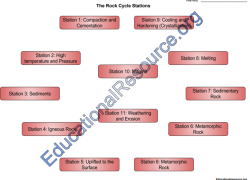
Students will roll dice and follow instructions to create unique rock cycle paths. This hands-on activity builds appreciation for Earth's diverse rock formations and their individual stories.