Engage students in a hands-on exploration of rock abrasion. They will classify, measure mass loss in a tumbler, and calculate change rates, revealing weathering's powerful impact.
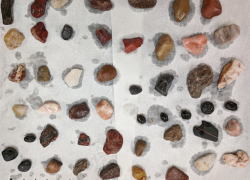
Challenge students to classify sedimentary rock samples using a dichotomous key. They will hone observation, inference, and conclusion-making skills, discovering how these rocks are grouped.
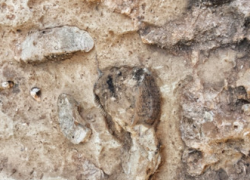
Engage students in identifying igneous rocks with a dichotomous key. They will explore texture, composition, and color, and review crystallization, intrusive, and extrusive rock formation.
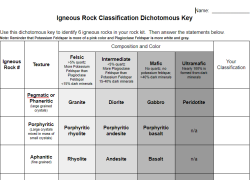
Students explore ten Earth Science disciplines, research career descriptions, salaries, and educational paths. They discover diverse opportunities and financial potential in geology.
Engage students measuring metric distances by propelling pens across the room. They will discover the Magnus Effect and learn to analyze data using spreadsheets with formulas.
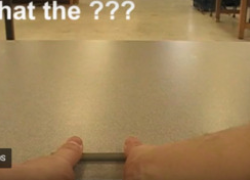
Students explore rock weathering processes by identifying examples and creating a presentation. They analyze mechanisms, agents, and climate connections, then present their findings.
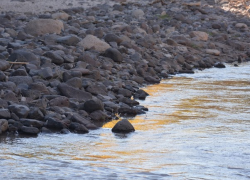
Students practice mineral identification using a dichotomous key. Given characteristics like luster and hardness, they learn to apply the key and master essential vocabulary before their test.
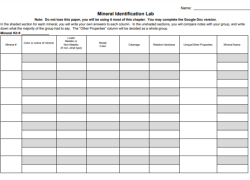
Students will master mineral identification in a 4-day lab. They will test streak, cleavage, luster, hardness, and other properties, then apply a dichotomous key.
Students model air convection by observing warming and cooling water. They discover how wind forms and explore high and low pressure systems. Connect temperature to atmospheric phenomena.
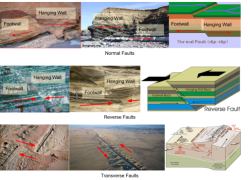
Students will use Google Drawing to create diagrams of earthquake fault types. They will identify real-world examples, apply forces like shear and tension, and label key geological structures.
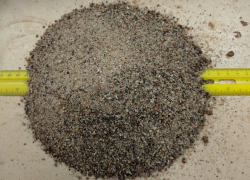
Students determine the angle of repose for sand, observing how slope impacts stability. They will compare trials, apply math skills, and analyze observations about erosion and landslides.
Guide students as they learn to identify, label, and map 25 major landforms spanning North and South America. An optional presentation enhances their geological understanding.