Students will explore convection, discovering how the sun's energy warms air and land, causing heat to transfer through rising warm air and sinking cool air.
Guide students as they explore the sun's daily journey, light, and warmth. A hands-on experiment lets them simulate sunrise and sunset, deepening their understanding.
Engage students in exploring oil spill realities and their environmental harm. They'll conduct experiments to compare cleanup methods, deepening their understanding of ocean protection efforts.
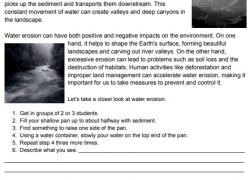
Students will read about and then explore water erosion through hands-on simulations. They'll observe how water shapes landscapes and analyze its diverse environmental impact.
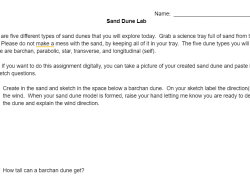
Students will explore five sand dune types by creating models and identifying characteristics. They will learn how wind patterns shape these geological formations, deepening their knowledge of earth science.
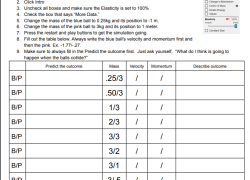
Students investigate collision and momentum through a digital simulation. They make predictions, analyze results, and deepen understanding of elastic/inelastic collisions, velocities, and data analysis.
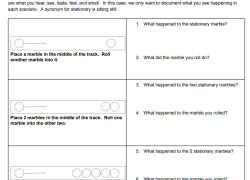
Students will conduct hands-on experiments, exploring motion and collision principles. They'll investigate how size and mass impact interactions, connecting lab discoveries to practical, real-life physics.
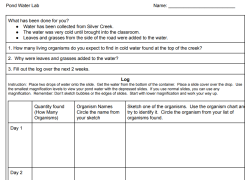
Students observe and document pond water organisms over two weeks. They analyze collected data to calculate population growth rates, create functions, and predict future populations.
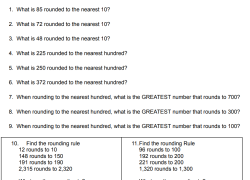
Support students struggling with rounding to master key concepts. Through focused discussion of targeted questions, students will clarify misconceptions and strengthen their number sense.
Collect essential student details from parents to better meet individual learning needs. Students will receive tailored support and benefit from a more informed classroom approach.
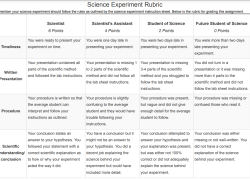
Help students understand expectations for their science experiment presentations. Grade their scientific inquiry, data interpretation, and communication effectively with clear criteria.
Students will combine two simple sentences into one compound sentence. They will practice using conjunctions effectively, strengthening their understanding of sentence structure and improving writing fluency.