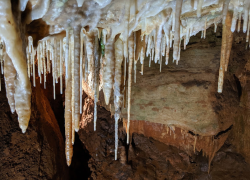
Students learn about common cave formations by identifying images, then research an assigned cave to answer specific questions. This activity builds curiosity for Earth's amazing underground environments.
Students explore and compare the immense depths of water bodies, from oceans to the Marianas Trench, using an engaging 3D animation. Great for oceanography or plate tectonics.
Students will learn Earth's crust, mantle, and core, plus convection and Pangaea. An engaging, animated song and video help them visualize these fascinating concepts.
Students explore Earth's layers, scientific discovery methods, and concepts like convection currents and density. They will understand how layers work together to form our planet.
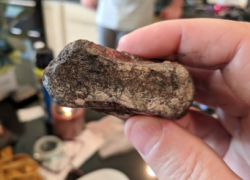
Engage students in the meticulous process of fossil excavation and preparation. They will learn how ancient relics journey from discovery in rock to museum exhibition.
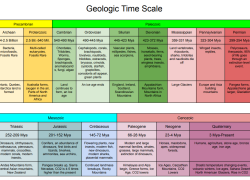
Guide students to explore Earth's geologic history from Precambrian to Cenozoic. They will learn about ancient creatures and landforms through a captivating, color-coded visual timeline.
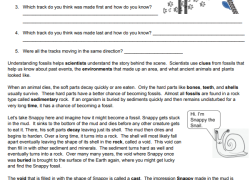
Students will learn about diverse fossil types, from trace to body fossils. They will discover their unique characteristics, formation processes, and significance in understanding Earth's past.
Students will observe ancient tracks, create mold fossils, and classify prehistoric teeth. They will learn about fossil formation, analyze evidence, and develop paleontology and critical thinking skills.
Your students will investigate the Yellowstone Supervolcano's immense power, exploring large magma chambers and the potential for widespread ashfall after massive eruptions.
Students will learn about Alfred Wegener's continental drift theory and the challenges he faced gaining scientific acceptance for his groundbreaking ideas.
Students will explore the basics of volcanoes through an exciting, visual introduction. They will build foundational knowledge and spark interest in geological processes.
Engage students in observing four rocks to develop key observation and inference skills. They will infer rock environments and guess types before formal rock classification.