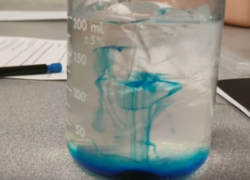
Students discover various fossil types, including trace, mold, and body fossils. They learn how these fascinating ancient remains form and explore their unique characteristics.
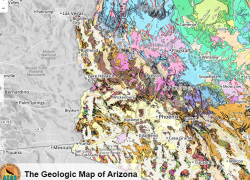
Students will analyze geologic maps to determine rock types, faults, and ages. They learn about Arizona's ancient environments and review essential Earth Science terms.
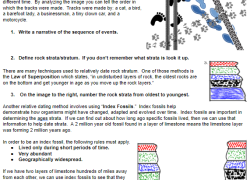
Students will learn relative dating methods by solving puzzles and numbering rock strata. They'll define superposition, index fossils, cross-cutting, and unconformities for geological sequencing practice.
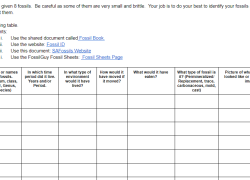
Students will identify various fossil types using provided links, researching their formation, ancient environments, and geologic time. They will also explore the significance of paleontological study.
Engage students in the meticulous process of fossil excavation and preparation. They will learn how ancient relics journey from discovery in rock to museum exhibition.
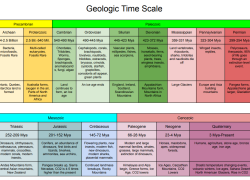
Guide students to explore Earth's geologic history from Precambrian to Cenozoic. They will learn about ancient creatures and landforms through a captivating, color-coded visual timeline.
Students will learn about diverse fossil types, from trace to body fossils. They will discover their unique characteristics, formation processes, and significance in understanding Earth's past.
Students will observe ancient tracks, create mold fossils, and classify prehistoric teeth. They will learn about fossil formation, analyze evidence, and develop paleontology and critical thinking skills.
Students will learn about Alfred Wegener's continental drift theory and the challenges he faced gaining scientific acceptance for his groundbreaking ideas.
Students will distinguish between true dinosaurs and common look-alikes. They will discover correct scientific classifications, debunking myths and understanding how dinosaurs are precisely categorized.
Equip students to master the scientific method through a hands-on experiment. They will practice data collection, identify variables, and formulate clear conclusions.