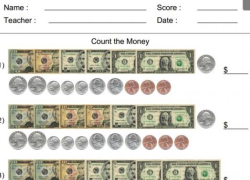
Students will practice counting US bills and coins with randomly generated problems. They will accurately sum various currency amounts, strengthening their K-3 money skills.
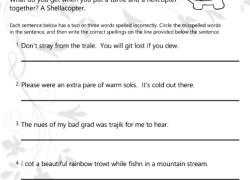
Students will locate and correct misspelled words in ten sentences using a word bank. This activity sharpens spelling skills while emphasizing 'tr' phonics blends.
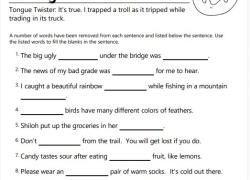
Help students master tricky 'tr' blend phonics. They complete a cloze reading activity, choosing 14 missing 'tr' words from a bank to strengthen their reading comprehension.
Help students master 'cr' blend words with a self-correcting assessment. They identify and practice challenging words, building essential phonics skills and accuracy.
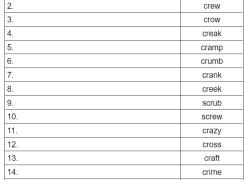
Students practice and demonstrate their knowledge of the 'ch' digraph. This formative spelling test helps them self-assess their phonetic understanding and track their phonics progress.
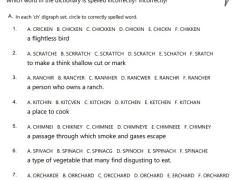
Students practice 'ch' digraphs with a cloze reading worksheet. They use a word bank to complete a fun story about Chester the Chimp, reinforcing their understanding of these sounds.
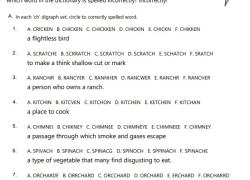
Students practice identifying and correctly spelling 'th' digraph words within sentences. They will build vocabulary and improve comprehension by completing cloze reading challenges.
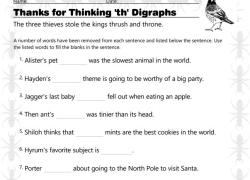
Help students master spelling by finding and correcting misspelled words within sentences. This practice emphasizes words containing the 'th' digraph, enhancing targeted literacy skills.
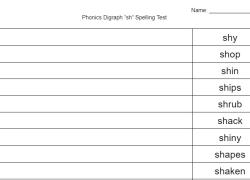
Evaluate students' 'sh' phonics digraph spelling skills. This 20-word test helps students demonstrate their ability to correctly spell words with the 'sh' sound.
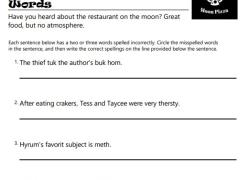
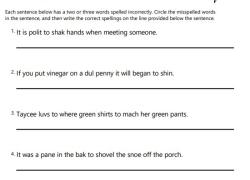
Challenge students to identify and correct spelling errors in ten sentences. They will find and circle misspelled words, then write the correct spellings.
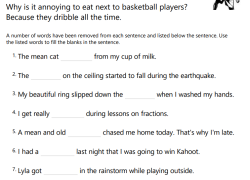
Engage students with a cloze reading activity focused on 'dr' blend phonics. They'll use a word bank of 10 'dr' blend spelling and vocabulary words to strengthen reading and spelling.
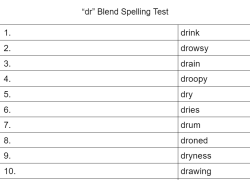
Challenge students to spell 20 'dr' blend words. They will listen, write, and self-correct their phonics spelling, strengthening their grasp of this blend through practice.