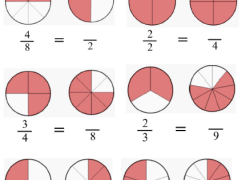
Help 3rd graders master equivalent fractions using visual pie and bar models. Students will identify equivalents and create their own examples, building conceptual understanding.
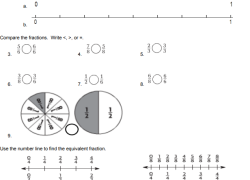
Students will explore equivalent and comparing fractions using number lines, diagrams, and word problems. They will strengthen their understanding of fraction properties and relationships.
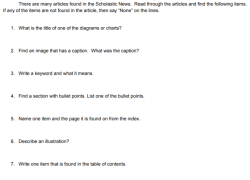
Students will locate and learn the purpose of various expository text features, including captions, diagrams, keywords, and glossaries, using any magazine.
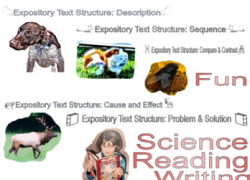
Guide students to identify and analyze various expository structures like description, sequence, and cause/effect. They will read texts, recognize signal words, and write their own structured examples.
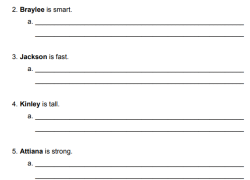
Students will enhance simple sentences using vibrant similes and creative metaphors. They will make writing more engaging and deeply understand core figurative language concepts.
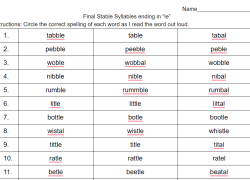
Students will practice phonics by listening to words ending in -le. They will then identify and circle the correct spelling, reinforcing their understanding of stable syllables.
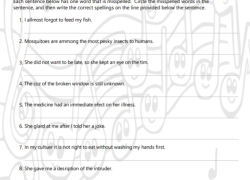
Challenge students to locate and correct misspelled vocabulary words within sentences. They will rewrite each sentence correctly, strengthening their spelling and editing skills.
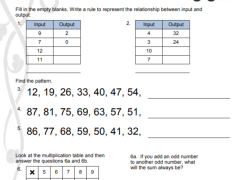
Students will identify numbered patterns, exploring input-output tables. They will practice addition, subtraction, and a multiplication pattern, developing critical thinking skills.
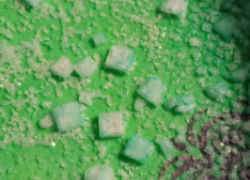
Students observe crystal formation and explore how impurities change mineral color in this Earth Science lab. Perfect for grades 3-10, it includes student work and sample results.
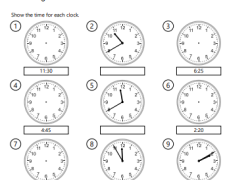
Students will master reading time by analyzing clock faces and drawing hands for digital displays. Includes a bonus multiplication review word problem.
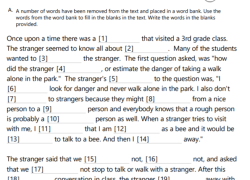
Engage 3rd graders with a cloze activity on stranger awareness. Students will fill 19 missing words from a list, enhancing reading comprehension, vocabulary, and safety knowledge.
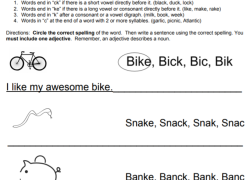
Help students master the phonics rule for words ending in ck, k, c, or ke. They will identify correct spellings and use them in their own sentences.