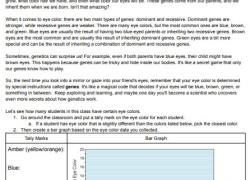
Students explore genetics, discovering how genes determine eye color. They'll collect classroom data, create a bar graph, and understand dominant and recessive inheritance patterns.
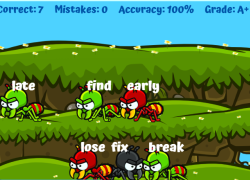
Students strengthen vocabulary by clicking on antonym ant pairs. Correct matches reveal more ants, increasing difficulty. An interactive way for students to learn and master opposing words.
Help 3rd-5th graders master author's purpose (inform, persuade, entertain). Students read texts, identify the purpose, and enjoy a fun board game while learning.
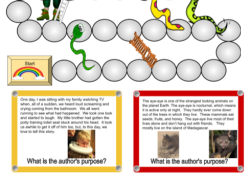
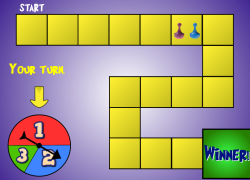
Help students master author's purpose through a competitive digital board game. They will read passages and decide if authors aim to inform, persuade, or entertain their audience.
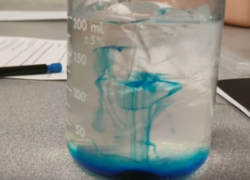
Equip students to master the scientific method through a hands-on experiment. They will practice data collection, identify variables, and formulate clear conclusions.
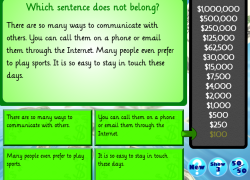
Engage students with a thrilling game where they identify main ideas and supporting details in reading passages. Practice comprehension skills and critical thinking while aiming for a million points!
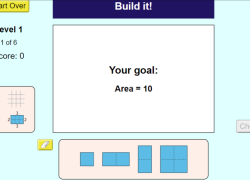
Students actively explore area and perimeter with a Phet simulation, building shapes to meet criteria. They advance through math challenges and a game, including fractions.
Students actively practice multiplication facts (1s-12s) with two engaging spooky bingo games. They'll match products to equations or vice versa, making Halloween math review fun.
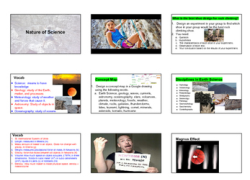
Empower students to investigate the nature of science through dynamic hands-on and digital labs. They will master the scientific method within Earth Science contexts.
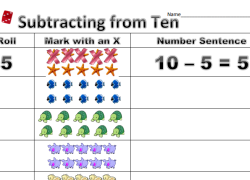
Students practice subtracting from ten by rolling a die to remove animals. They then write number sentences explaining the resulting amount, building foundational math skills.
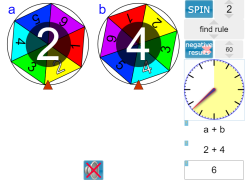
Empower students with dynamic spinners to explore probability, practice multi-step operations, and discover mathematical patterns. They will master value substitution.
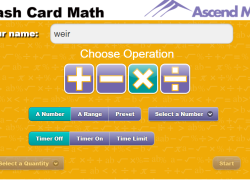
Challenge students with a dynamic Smart Board game. Teams answer math flashcards for multiplication, division, addition, or subtraction, competing in a timed relay. Great for practicing essential facts!