Students model air convection by observing warming and cooling water. They discover how wind forms and explore high and low pressure systems. Connect temperature to atmospheric phenomena.
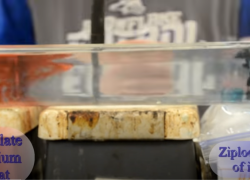
Students will actively observe Earth's plate tectonics with a simple chocolate demonstration. They'll witness crust break apart, magma rise, and understand earthquakes and igneous rock formation.
Guide students to observe and explain how geysers work. They will understand the roles of heat, pressure, and water in creating an eruption, connecting models to real phenomena.
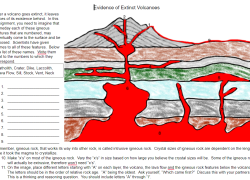
Students label volcanic features, learning igneous rock formation, superposition, and cross-cutting relationships. They will identify evidence of past volcanism and present real-world examples.
Engage students with a dynamic convection currents model and demonstration. They will visualize air movement, applying understanding to water convection, volcanoes, and Earth's mantle.
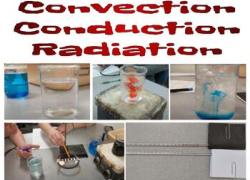
Students actively explore convection, conduction, and radiation through hands-on labs. They'll demonstrate principles using water, melting chocolate, heat lamps, and different colored papers.
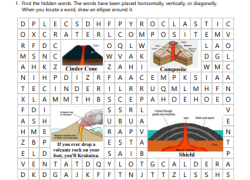
Students will explore volcano vocabulary using a word search and crossword puzzle. They will identify and learn terms like ash, lava, and eruption in engaging activities.
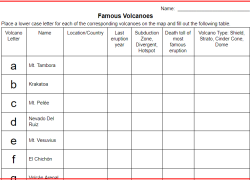
Students research 14 notable volcanoes, mapping locations, identifying plate boundaries, and classifying volcano types. They will explore eruption histories and geographical impacts.
Students will discover how supervolcano eruptions, like Mt. Tambora, triggered global climate crises and the devastating 1816 Year without a Summer.
Students will explore how composite and shield volcanoes form and their distinct lava types. The video also covers the Ring of Fire and magma formation.
Your students will investigate the Yellowstone Supervolcano's immense power, exploring large magma chambers and the potential for widespread ashfall after massive eruptions.